
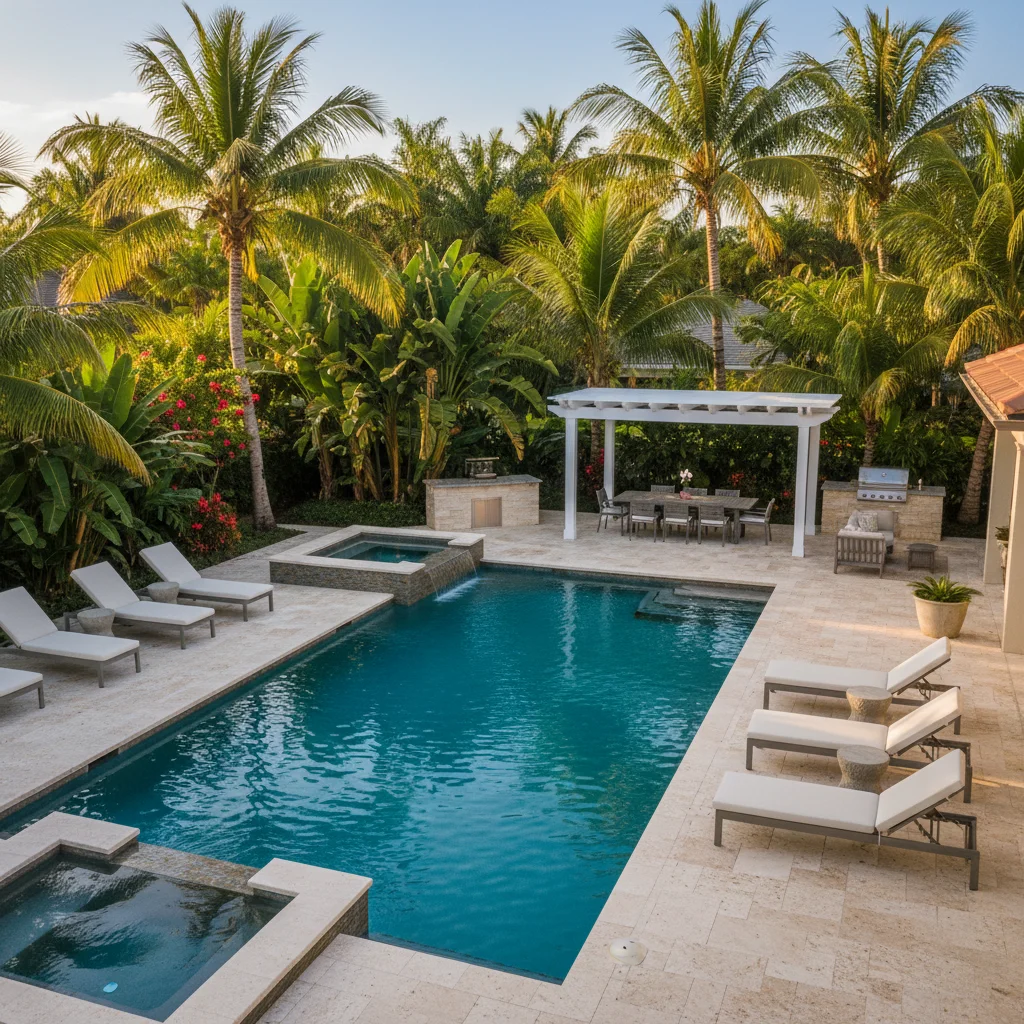

Are Saltwater Pools Harmful to Travertine Decks in Central Florida? – Expert Answer
Saltwater pools in Central Florida generally do not damage travertine decks when properly maintained. Unlike traditional chlorine pools, saltwater systems use salt-generated chlorine, which is gentler on surfaces like travertine. Given Florida’s humid climate and common use of travertine in over 500 pools built locally, proper care is essential. For expert advice, call (407) 707-6662.
In This Article
- What should I know about saltwater pools and travertine decks?
- How do saltwater and chlorine impact travertine decks?
- What are the local considerations for saltwater pools and travertine decks in Central Florida?
- What are the best maintenance tips for travertine decks with saltwater pools?
- What are the permitting and HOA rules for saltwater pools in Central Florida?
- What expert advice does Aqua Custom Pools & Spas have about saltwater pools and travertine decks?
- Frequently Asked Questions
- What related resources are available for saltwater pools and travertine decks?
What should I know about saltwater pools and travertine decks?
Saltwater pools use a salt chlorine generator to convert salt into chlorine, providing a softer sanitizer compared to traditional chlorine pools. Travertine, a popular natural stone decking choice in Central Florida due to its durability and slip resistance, is often used in neighborhoods such as Celebration, Lake Nona, and Windermere. Homeowners often wonder if the salt in the water can cause erosion or discoloration of their travertine decks.
While salt is a mineral that can be corrosive in high concentrations, the levels used in saltwater pools are typically low enough not to cause significant damage to properly sealed travertine surfaces. However, care must be taken to maintain balanced water chemistry.
For those researching pool construction in Orange County or Osceola County, understanding the compatibility of your pool’s sanitation system with your deck material is crucial. Aqua Custom Pools & Spas, a trusted custom pool builder in Saint Cloud FL, has extensive experience managing these concerns.
How do saltwater and chlorine impact travertine decks?
Traditional chlorine pools rely on adding chlorine directly, which can lead to higher chlorine spikes and more acidic water if not monitored correctly. This acidity can etch natural stone surfaces like travertine over time if splashed or exposed frequently.
Saltwater pools generate chlorine at a steadier rate which often results in more stable pH levels, reducing the risk of acidic damage. However, salt residue can accumulate if water splashes and evaporates on the deck, requiring regular rinsing and sealing of travertine to prevent surface degradation.
Maintaining proper water balance, including pH and alkalinity, is essential regardless of sanitation method to protect your travertine deck investment.
What are the local considerations for saltwater pools and travertine decks in Central Florida?
Central Florida’s unique climate and environmental factors play a role in travertine pool deck longevity. With a population exceeding 2.5 million in the greater Orlando metro area and many homes featuring pools with travertine decks, local factors such as high humidity, sandy soil, and hurricane season must be considered.
Local permitting differences between counties like Orange and Osceola affect pool construction and deck installation requirements. Additionally, master-planned communities in areas like Kissimmee and St. Cloud often have HOA rules regulating pool decking materials and maintenance to ensure neighborhood aesthetics and property values.
Choosing a local custom pool builder familiar with these nuances, such as Aqua Custom Pools & Spas, ensures compliance and durability for your pool and travertine deck.
What are the best maintenance tips for travertine decks with saltwater pools?
- Regular Cleaning: Rinse decks often to remove salt residue and prevent mineral buildup.
- Sealing: Apply a high-quality sealer every 1-2 years to protect against stains and erosion.
- Water Chemistry: Keep pool water pH between 7.2 and 7.8 to avoid acidic conditions.
- Drainage: Ensure proper drainage around the deck to prevent standing water and salt accumulation.
- Professional Inspections: Schedule regular inspections with your pool contractor to catch early signs of wear.
Following these tips extends the life and beauty of your travertine deck even with saltwater pool use.
What are the permitting and HOA rules for saltwater pools in Central Florida?
Pool and deck construction in Central Florida requires permits, which vary by county. Orange and Osceola counties have specific guidelines on materials and installation techniques to ensure safety and code compliance. Additionally, many neighborhoods such as those in Lake Nona or Celebration have HOA covenants that regulate deck materials and maintenance schedules.
Working with a knowledgeable custom pool builder in Orlando FL or Kissimmee FL can streamline permitting and HOA approval, avoiding costly delays or modifications.
What expert advice does Aqua Custom Pools & Spas have about saltwater pools and travertine decks?
With over 25 years and 500+ pools built in Central Florida, Aqua Custom Pools & Spas, LLC understands the delicate balance between pool sanitation and deck durability. We recommend selecting high-quality travertine, proper sealing, and routine maintenance to protect your investment.
Our team serves homeowners across Orange, Osceola, Seminole, Lake, Polk, Volusia, and Brevard counties, including cities like St. Cloud and Kissimmee. Whether you’re researching a saltwater pool or a chlorine system, we offer personalized guidance tailored to Central Florida conditions.
Frequently Asked Questions
Saltwater pools can cause minor discoloration if salt residue is allowed to build up on unsealed travertine. Regular rinsing and sealing help prevent staining and keep your deck looking fresh and natural.
Yes, sealing travertine is essential to protect against salt and chemical exposure. It creates a barrier that prevents erosion, staining, and moisture penetration, extending the lifespan of your deck.
Central Florida’s humidity, sandy soil, and hurricane season increase wear on travertine decks. Proper sealing, drainage, and maintenance help mitigate these environmental impacts and preserve deck integrity.
Saltwater pools often maintain more stable pH levels, reducing acid exposure that can damage travertine. However, both require balanced water chemistry and proper maintenance for deck protection.
Have Questions About Your Pool Project?
Aqua Custom Pools helps homeowners throughout Central Florida. Schedule a free 3D design consultation or call (407) 707-6662.
Aqua Custom Pools & Spas · Last updated: May 12, 2026