

What Are Florida Pool Safety Requirements for Homeowners? Expert Answer for Central Florida
Florida pool safety requirements for homeowners in Central Florida include specific fencing, gate, and alarm regulations designed to prevent accidents. With over 500 pools built in the region, Aqua Custom Pools & Spas knows local codes inside out. For detailed guidance, call (407) 707-6662.
In This Article
- What are the Florida pool safety laws?
- What are the key safety features required by law for pools?
- What is the permitting and inspection process for pools in Central Florida counties?
- What are the local HOA and community rules for pool safety?
- What are expert tips for enhancing pool safety?
- What are the common pool safety FAQs?
- What are the related resources for Central Florida pool owners?
What are the Florida pool safety laws?
Florida has enacted the Residential Swimming Pool Safety Act, which mandates strict safety measures for privately owned pools to prevent drownings, especially involving children. In Central Florida, counties like Orange, Osceola, and Seminole enforce these standards with local variations. Homeowners must ensure compliance with state laws as well as county-specific codes when constructing or maintaining a pool.
Key state requirements include installing a safety barrier at least 48 inches high, self-closing and self-latching gates, and pool alarms. These rules are enforced through permitting processes that differ somewhat between counties such as Orange County and Osceola County. Understanding these nuances helps homeowners avoid fines and ensures safe use of pools year-round.
For professional assistance, consider a custom pool builder in Central Florida who is well versed in local codes and regulations.
What are the key safety features required by law for pools?
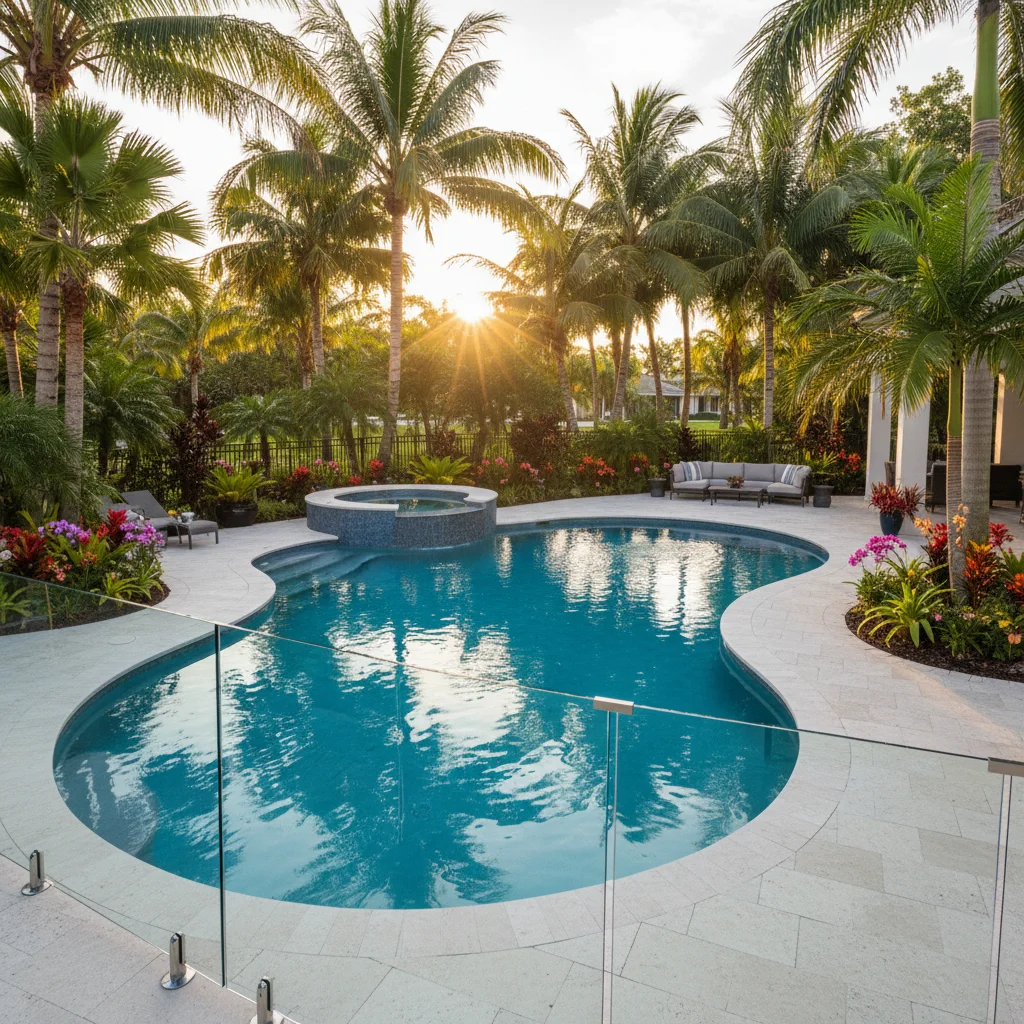
- Fencing: A barrier at least 48 inches tall, with no gaps or openings that a child could crawl through.
- Gates: Must be self-closing, self-latching, and open outward away from the pool.
- Alarms: Pool alarms or door alarms are required to alert when someone enters the pool area.
- Pool Covers: Safety covers that comply with ASTM standards may be used as an alternative.
- Other Requirements: In some communities, additional features like anti-entrapment drain covers and safety signage are mandatory.
These safety features help reduce drowning risks, especially important in Central Florida where the population includes many families with young children and the climate encourages year-round pool use.
What is the permitting and inspection process for pools in Central Florida counties?
Permitting requirements vary between counties. For example, Orange County requires detailed pool safety inspections before issuing final occupancy permits, focusing on barrier integrity and alarm systems. Osceola County has similar requirements but may have different inspection schedules or documentation standards.
Homeowners should contact their local building department or work with a knowledgeable pool construction in Orange County or Osceola County professional to ensure all permits and inspections meet county-specific codes.
What are the local HOA and community rules for pool safety?
Many master-planned communities in Central Florida, such as Celebration and Lake Nona, have Homeowners Association (HOA) rules that add layers of pool safety requirements. These may include stricter fence standards, specific gate hardware, or restrictions on pool alarms to reduce noise.
Homeowners need to review their HOA guidelines carefully before building or remodeling pools. Compliance with HOA regulations is often mandatory and enforced alongside county and state laws.
What are expert tips for enhancing pool safety?
- Maintain Barriers Regularly: Check fences and gates frequently for damage or wear to prevent accidental access.
- Use Multiple Safety Layers: Combine fencing, alarms, and covers for the best protection.
- Educate Family Members: Teach children about pool safety rules and the dangers of unsupervised swimming.
- Consider Professional Installation: Work with a custom pool builder in Orlando or nearby cities like Kissimmee and Saint Cloud who understand local safety codes and best practices.
What are the common pool safety FAQs?
Florida law requires pool fences to be at least 48 inches tall to prevent small children from climbing over. The fence should have no gaps or openings larger than four inches to ensure safety and compliance with state regulations.
Yes, Florida requires pool alarms that alert homeowners when someone enters the pool area. This includes door alarms on doors leading to the pool and surface wave or gate alarms, depending on the setup and local codes.
Yes, many HOAs in Central Florida have additional pool safety rules beyond state regulations. These can include specific fencing styles, gate hardware, or noise restrictions on alarms. Always check HOA guidelines before pool installation.
Counties like Orange and Osceola have similar safety requirements but differ in inspection timing and documentation. Some require pre-final inspections; others focus on final permit issuance. Working with local builders ensures compliance.
What are the related resources for Central Florida pool owners?
Have Questions About Your Pool Project?
Aqua Custom Pools helps homeowners throughout Central Florida. Schedule a free 3D design consultation or call (407) 707-6662.
Aqua Custom Pools & Spas · Last updated: May 12, 2026